Smart IT tools
Can You Decrypt MD5 Hash?
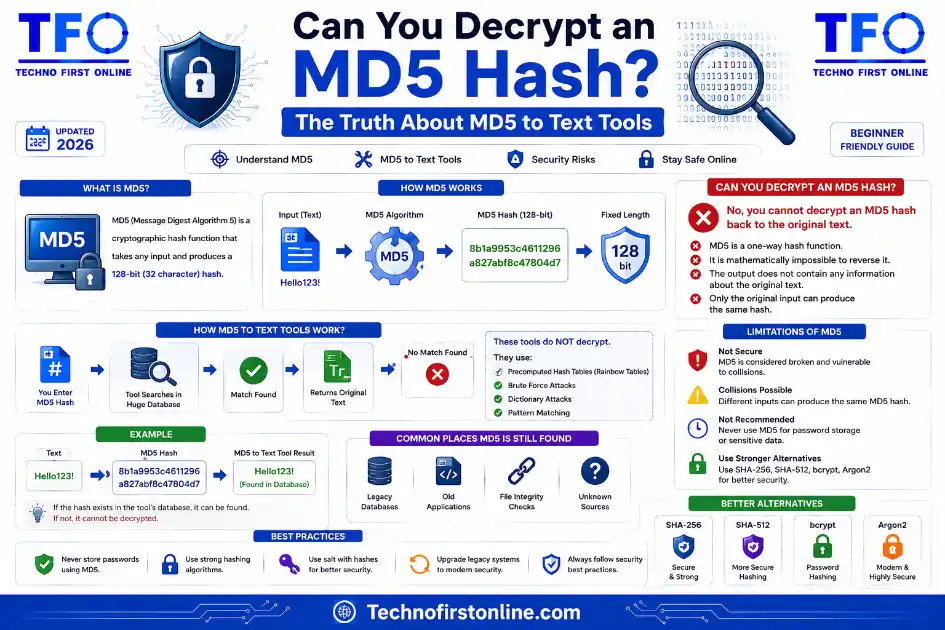
Can you decrypt an MD5 hash?Short answer: No.MD5 is a one-way hash function — not encryption. There is no
mathematical way to reverse it.What “MD5 decrypter” tools actually do:
→ They search a precomputed database of known inputs and hashes
→ If your hash appears in their database, they return the match
→ If it doesn’t appear, they return nothingThis is called a lookup table or rainbow table attack — not decryption.Implications:
✓ MD5 of a common word/phrase → might be “found”
✓ MD5 of a unique or complex string → will NOT be found
✗ True mathematical reversal → impossible, regardless of tool
MD5 Decrypt Online
If you’ve ever searched for “MD5 decrypter,” “reverse MD5,” or “MD5 decrypt online,” you’ve probably found dozens of websites claiming they can reverse an MD5 hash and recover the original text. Some of them even show you a result. So is it actually possible to decrypt MD5? And if those tools work, how?
The short answer: no, you cannot truly decrypt MD5 hash. MD5 is not encryption — it’s a one-way hash function. There is no key, no algorithm, and no mathematical process that can reverse an MD5 hash back into the original input. What those “decrypter” tools are actually doing is something completely different, and understanding the distinction matters more than most people realize.
We’ve covered how MD5 hashing works and what it’s used for and why MD5 is no longer considered secure in previous guides. This post focuses specifically on the “can you decrypt MD5” question — and explains what those online tools are actually doing when they seem to give you an answer.
Why MD5 Cannot Be Decrypted
To understand why decrypt MD5 function is mathematically impossible, you need to understand what makes a hash function different from encryption.
Encryption is a two-way process. You take data, apply an algorithm and a key, and get ciphertext. Reverse the process with the right key, and you get the original data back. That reversibility is the entire point of encryption — it’s designed to be undone.
Hashing is a one-way process. You take data of any size, run it through a mathematical function, and get a fixed-length output. There is no reverse operation. No key, no algorithm, and no amount of computing power can mathematically recover the original input from the hash alone.
MD5 was formally defined as a one-way hash function in RFC 1321 — the original technical specification written by Ronald Rivest at MIT. The document explicitly describes MD5 as a one-way function where it is computationally infeasible to produce a message having a given message digest, meaning reversing the hash is intended to be impossible by design.
Encryption vs Hashing — Core Difference:
──────────────────────────────────────────────────────────────
Property          Encryption           Hashing (MD5)
──────────────────────────────────────────────────────────────
Direction         Two-way              One-way only
Reversible?       Yes (with key)       No — by mathematical design
Key required?     Yes                  No key exists
Output size       Variable             Fixed (32 chars for MD5)
Purpose           Secure data storage  Fingerprinting / verification
Example           AES, RSA             MD5, SHA-256, bcrypt
──────────────────────────────────────────────────────────────
There’s also a deeper mathematical reason why reversing MD5 is impossible: information loss. When MD5 processes input, it discards information during compression. The output is always 128 bits regardless of input size. If you hash a 10MB file, that entire file gets compressed into a 128-bit fingerprint. Billions of different 10MB files could theoretically produce the same hash — so even if you could “reverse” it, you’d have no way to know which original input was correct.
What Do “MD5 Decrypt” Tools Actually Do?
Here’s where it gets interesting. Some of those “decrypt MD5” websites do sometimes return a result. How?
They’re using rainbow tables or lookup databases — large precomputed collections of common inputs and their corresponding MD5 hashes. When you paste a hash into these tools, they search their database for a matching entry. If they find it, they return the corresponding input. If they don’t find it, they return nothing.
This is not decryption. This is a lookup, and there’s a critical difference:
True Decryption vs Lookup Table:
──────────────────────────────────────────────────────────────────
True Decryption:
  Input:  5f4dcc3b5aa765d61d8327deb882cf99
  Process: Apply reverse algorithm + key
  Output: Works for ANY input, guaranteed
  Reality: Impossible for MD5

Lookup Table Search:
  Input:  5f4dcc3b5aa765d61d8327deb882cf99
  Process: Search database for this exact hash
  Output: "password" (if "password" is in their database)
  Reality: Only works if the original input was common
           enough to have been precomputed and stored
──────────────────────────────────────────────────────────────────
These lookup databases can be enormous — billions of entries covering dictionary words, common passwords, number sequences, and short strings. Sites offering to “reverse MD5” or work as an “MD5 decrypt online” tool openly rely on these databases. CrackStation, one of the better-known services of this type, openly states their lookup table contains over 1.5 billion words and phrases. But that’s still a finite set. The moment your original input is something unique — a random string, a full sentence, a private identifier — it won’t be in any lookup table, and no “decrypt MD5” will find it.
When Do These MD5 Lookup Tools Actually Work?
Understanding when they work — and when they don’t — is important for anyone using MD5 in the real world.
Input Type                     Lookup Tool Result
──────────────────────────────────────────────────────────────
Common password ("password")   Very likely to be found
Dictionary word ("sunshine")   Likely to be found
Name + number ("john123")      Probably in database
Short random string ("k9Xm")   Unlikely to be found
Full sentence or phrase         Almost certainly not found
Random UUID or token            Not found
Output of another hash          Not found
MD5 with salt added             Never found
──────────────────────────────────────────────────────────────
This is precisely why salting passwords before hashing them is so important. When a unique random salt is added to a password before it’s hashed, the input to the MD5 function is something no lookup table has ever seen — “sunshine” becomes “sunshinex9K2mQ7r” (or similar), and that exact combination doesn’t exist in any rainbow table. We covered exactly how this works in our complete guide to password salting.
The Difference Between “Cracking” and “Decrypting”
These two words get used interchangeably in casual conversation, but they mean very different things in security terms:
Decrypting means mathematically reversing an algorithm using a key or formula. For MD5, this is provably impossible.
Cracking means finding an input that produces a given hash — either by brute force (trying billions of guesses) or by looking up the hash in a precomputed database. For MD5, cracking is possible for weak or common inputs, but it becomes exponentially harder as inputs become longer, more complex, or uniquely salted.
When news headlines say a company’s “MD5 passwords were cracked,” they mean the hashes were looked up or brute-forced — not that anyone reversed the algorithm. The distinction matters because people often read “MD5 was decrypted” and conclude that MD5 has some secret backdoor or that someone found a mathematical way to reverse it. Neither is true.
What makes MD5 weak for passwords isn’t that it can be reversed — it’s that it’s fast. An attacker with a modern GPU can compute billions of MD5 hashes per second, making brute-force guessing practical. Add in a precomputed rainbow table and the attack becomes even faster for common inputs. We covered the speed problem and its consequences in our full comparison of MD5 vs SHA-256 vs Bcrypt.
Is MD5 Pre-Image Resistant?
This is a more technical question, but worth addressing because it often comes up. Hash functions are expected to resist several types of attacks:
Hash Function Security Properties:
──────────────────────────────────────────────────────────────────
Property              Meaning                          MD5 Status
──────────────────────────────────────────────────────────────────
Collision resistance  Hard to find two inputs with     BROKEN
                      the same hash
Pre-image resistance  Hard to find ANY input that      Weakened but
                      produces a given hash             holds in practice
Second pre-image      Hard to find a DIFFERENT input   Weakened
resistance            matching a specific hash
──────────────────────────────────────────────────────────────────
MD5’s collision resistance is completely broken — researchers can deliberately create two different files that produce the same MD5 hash. But pre-image resistance — the property that makes it hard to reverse a hash — is a different attack, and MD5 still holds up reasonably well against it in practice. This is exactly why online “decrypters” can only find common inputs through lookup tables, not by actually reversing the algorithm.
NIST’s guidance on hash function security properties, documented in NIST Special Publication 800-107, formally defines these three resistance properties and explains why collision resistance failure doesn’t automatically mean pre-image resistance has failed. MD5 lost its collision resistance — but mathematically reversing it remains infeasible.
Why This Matters for Password Security
If MD5 can’t be reversed, why is it considered so dangerous for storing passwords?
The reason is brute force speed combined with the absence of salting. An attacker who steals a database of MD5 password hashes doesn’t need to reverse anything — they just need to guess. And because MD5 is so fast, they can try billions of guesses per second. For any password that a human might reasonably choose — dictionary words, names, keyboard patterns, common substitutions — this approach works quickly and effectively.
The fix isn’t to use a hash that’s harder to brute-force in theory — it’s to use an algorithm that’s deliberately slow and automatically salted. That’s why bcrypt and Argon2id exist, and why they’re recommended by OWASP and NIST for password storage. We’ve covered both algorithms in detail in our guide to what bcrypt is and our guide to what a password hash generator actually does.
Should You Use Online MD5 Lookup Tools?
For development and testing purposes — checking what a known hash corresponds to, or verifying that a tool is generating the expected output — these lookup tools are useful and harmless. For anything involving real user data, passwords, or sensitive information, you should never paste actual hashes into third-party online tools.
If you need to generate MD5 hashes for legitimate purposes — file integrity checks, deduplication, or development testing — our free Hash Generator handles it entirely in your browser. Nothing you type is sent to any server, which means no risk of your input ending up in someone else’s lookup database.

TechnoFirstOnline provides powerful free online tools, expert tutorials, and smart digital resources to simplify everyday tasks. Explore SEO, image, AI, PDF, and productivity tools designed for everyone.
Other Useful Tools


















Password Generator
Open
People Also Read



stylish text generator

How to change to sentence case online
How to Automatically Change Capital Letters to Lowercase

Grammarly Word Count vs Free Word Counter

word counter google docs — How to Check Word Count

Word Count Checker — Check Word Count in PDFs & Documents
Free Character Counter Online — Count Letters & Spaces

How to Word Counter Online Free
NTLM Hsah vs MD5 vs SHA

password salting explained

php password hash guide
What Is a Password Hash Generator

SHA-1 vs SHA-256 vs SHA-512 comparison

what is bcrypt beginners guide

md5 vs sha256 vs bcrypt
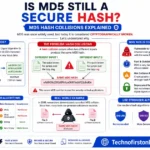
Is MD5 Still Secure Hash Collisions Explained

How Generate Hash Online

MD5 Hash Generator Online guide

WiFi QR Code Generator

LastPass vs Norton vs Bitwarden

Password Manager Pros & Cons

16 Character Password Generator

What Makes a Password Strong

Different Password for Every Website
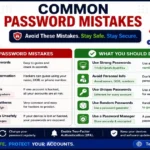
Common Password Mistakes
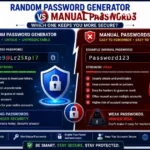
Random Password Generator vs Manual Passwords

Strong Password Examples

How to Create a Strong Password
Want to generate and compare MD5, SHA-1, SHA-256, and SHA-512 hashes securely? Use our Hash Generator Online Free to create cryptographic hashes instantly in your browser without uploading your data to any server.
No, you cannot decrypt MD5 hash because MD5 is a one-way cryptographic hash function, not an encryption algorithm. Websites that claim to decrypt MD5 hashes simply compare them against precomputed lookup databases or rainbow tables. If the original input isn't already in their database, the hash cannot be recovered.
Frequently Asked Questions
No. MD5 is a one-way hash function, not encryption. There is no mathematical process, key, or algorithm that can reverse an MD5 hash back into the original input. It is computationally infeasible by design.
They don’t actually reverse the hash. They search a precomputed database (called a rainbow table or lookup table) of known inputs and their corresponding MD5 hashes. If your hash appears in their database, they return the matching input. If it doesn’t, they return nothing.
No. Encryption is reversible — you can encrypt and decrypt with the right key. MD5 is a one-way hash — the process cannot be reversed. The two are fundamentally different operations with different purposes.
Because those hashes correspond to common words, passwords, or short strings that were already in the tool’s precomputed lookup database. The more unique or complex the original input, the less likely it is to appear in any lookup table.
Yes, completely. When a unique random salt is added to a password before MD5 hashing, the input becomes something no precomputed table has ever seen. The specific combination of password plus salt has never been hashed and stored, making lookup attacks impossible.
Yes, in practice. MD5’s collision resistance is broken — meaning two different inputs can be made to produce the same hash deliberately. But pre-image resistance — the inability to find any input that produces a specific hash — still holds in practice. Online “decrypters” work through lookups, not by breaking this property.
Use bcrypt or Argon2id. Both are intentionally slow, include automatic salting, and are specifically designed to resist brute-force and lookup attacks on stolen password databases.