Smart IT tools
Best Free Keyword Density Checker Tools
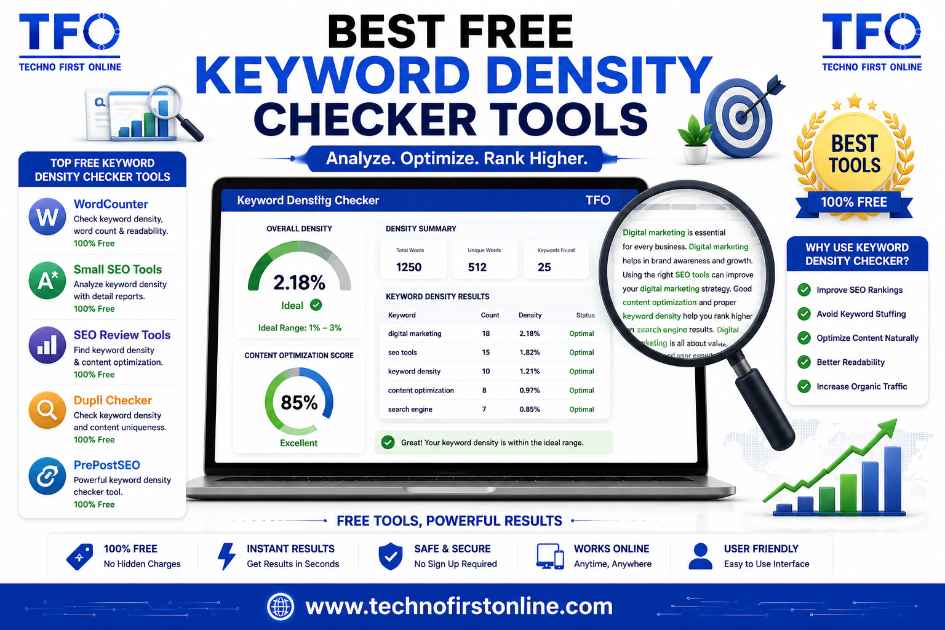
Several established platforms, including SmallSEOTools, SEO Review Tools, Semrush, and Moz, offer some form of keyword density checking, either as a standalone free tool or bundled within a broader SEO suite. The right choice depends on whether you want a quick, no-signup check or a deeper analysis connected to a fuller keyword research and content optimization workflow.
Why So Many Tools Offer the Same Core Feature
Keyword density checking is one of the simplest calculations in SEO, which is exactly why so many platforms include some version of it, either as a free standalone offering to attract traffic, or as one small feature buried inside a larger paid suite. Because the underlying formula is identical everywhere, the real differences between platforms come down to presentation, extra features layered on top, and how the tool fits into a broader content workflow rather than the core calculation itself.
This makes comparing free keyword density checker options less about which one calculates “more accurately,” since the math doesn’t really vary, and more about which interface, feature set, and workflow fits how you actually write and optimize content.
SmallSEOTools: Quick and No-Frills
SmallSEOTools built its reputation on offering a wide catalog of free, no-signup utilities covering everything from plagiarism checking to grammar correction, and its keyword density checker follows the same pattern. It’s designed for a fast, single-purpose check: paste your content, get a percentage breakdown, done. There’s no account creation required and no broader dashboard to navigate.
This straightforward approach works well when you just need a quick number without committing to a larger platform. The tradeoff is that it typically won’t connect that density result to broader keyword research, competitor analysis, or content scoring, since that’s simply not what the tool is built to do.
SEO Review Tools: Bundled With a Wider Free Toolkit
SEO Review Tools takes a similar no-signup approach but positions its keyword density checker as one utility among a larger collection of free SEO tools, spanning backlink checkers, meta tag analyzers, and site speed tests. This bundling can be useful if you’re already using several of their other free utilities during a content review, since it keeps you within one familiar interface rather than switching between different sites for each check.
Functionally, the density calculation itself tends to be comparable to other free tools in this category. The value here comes more from convenience if you’re already running other checks on the same platform, rather than from any meaningfully different calculation method.
Semrush: Deep Integration Within a Paid Content Suite
Semrush approaches density checking differently, folding it into a broader content optimization workflow rather than offering it as an isolated free utility. Within its content marketing toolkit, keyword usage recommendations typically appear alongside competitor content analysis, suggested related terms, and readability scoring, giving writers a fuller picture connected to actual ranking data rather than a standalone percentage in isolation.
This depth comes at a cost, since Semrush operates primarily as a paid platform, with free access typically limited to a small number of checks before requiring a subscription. For casual, occasional density checking, this level of integration is likely more than most writers need. For teams running content strategy at scale, connected to keyword research and competitor tracking, the added context can genuinely inform decisions a simple density percentage alone wouldn’t reveal.
Moz: Positioned Within Broader SEO Metrics
Moz, similarly, tends to fold keyword usage analysis into its wider suite of SEO tools rather than offering a dedicated standalone keyword density checker as its primary draw. Its strength lies in connecting on-page keyword usage to domain authority metrics, ranking tracking, and broader site health data, giving a more holistic view for teams already invested in Moz’s ecosystem for other SEO tasks.
Like Semrush, this integrated approach means Moz is generally better suited to ongoing SEO work across multiple pages and campaigns, rather than a one-off check on a single article you want analyzed in the next thirty seconds.
What to Look For in Any Keyword Density Checker
Regardless of which platform you eventually settle on, a handful of features separate a genuinely useful keyword density checker from a bare-bones one that only returns a single number:
Multi-word phrase support. Since most real target keywords span two or three words, a keyword density checker limited to single-word counting misses whether your actual phrase appears together as a unit.
A dedicated lookup field. Scrolling through a long ranked list to find your one target term wastes time. A well-designed keyword density checker lets you type in the exact phrase and get an isolated answer immediately.
Clear percentage context. The best tools don’t just show a raw number, they indicate whether that percentage falls within a generally healthy range, helping you interpret the result without needing outside knowledge of typical SEO benchmarks.
Reasonable speed. Whether free or paid, a keyword density checker that takes too long to process a few thousand words disrupts the editing flow it’s meant to support, especially when you’re running the check repeatedly during revisions.
These criteria matter more than brand recognition alone. A lesser-known keyword density checker that covers all four points can genuinely outperform a well-known name that only offers a basic single-word percentage without any supporting context.
Keyword density percentages become much more meaningful when you know the exact length of your content. Before optimizing any article, you can use our Word Counter Tool to instantly calculate words, characters, sentences, paragraphs, reading time, and speaking time. These insights make it easier to create well-balanced content without manually counting anything.
Comparing the Options Side by Side
| Platform | Access Model | Best For | Extra Context Provided |
|---|---|---|---|
| SmallSEOTools | Free, no signup | Quick single-article checks | Minimal, focused purely on density |
| SEO Review Tools | Free, no signup | Bundled checks alongside other free utilities | Access to related free SEO tools |
| Semrush | Freemium/paid | Content strategy at scale | Competitor data, related keywords, readability |
| Moz | Freemium/paid | Ongoing SEO campaigns | Domain authority and ranking context |
Where a Simple Browser-Based Tool Fits In
Between these options sits a category worth mentioning separately: lightweight, browser-based density checkers that run entirely client-side without uploading content to any server. These tools trade the broader ecosystem features of Semrush or Moz for speed, privacy, and simplicity, similar in spirit to SmallSEOTools and SEO Review Tools, but often with a sharper focus specifically on keyword density calculation rather than being one small feature within a large multi-tool platform.
For writers who mainly need to confirm a percentage before publishing, without connecting that number to competitor research or ranking data, this lightweight category often covers everything necessary without the overhead of navigating a larger dashboard built for broader SEO campaigns.
Why Choose TechnoFirstOnline Keyword Density Checker?
Choosing the right keyword density checker isn’t just about finding the percentage of a keyword—it’s about understanding how your content is optimized as a whole. Our browser-based tool Free keyword density checker combines keyword density analysis with keyword frequency reports, multi-word phrase analysis, readability statistics, and content metrics in a single, easy-to-use interface. Since all processing happens locally within your browser, your articles remain completely private, making the tool suitable for unpublished drafts, client content, academic writing, and business documents. We built this tool to provide a fast, accurate, and privacy-focused solution without unnecessary ads, account registration, or server-side processing.
How to Choose Based on Your Actual Workflow
If you publish occasionally and just need a quick check: A free, no-signup tool like the SmallSEOTools or SEO Review Tools style of checker, or a lightweight browser-based option, covers the need without any learning curve.
If you’re managing SEO for a business at scale: Semrush or Moz’s integration with broader keyword research and competitor tracking likely justifies the subscription cost, since density becomes one small piece of a much larger, connected strategy.
If privacy is a concern, such as checking unpublished client work: Look specifically for tools that state they process content client-side in your browser, since not every free tool makes this distinction clear, and some genuinely do upload content to a server for processing.
If you’re troubleshooting a specific over-optimization issue: A tool with clustering detection, similar to what’s covered in our guide on detecting and fixing keyword stuffing, matters more than which brand name is attached to the checker, since paragraph-level repetition patterns matter more than a single page-wide average.
Optimizing keyword density is only one part of successful on-page SEO. Search engines also rely on well-written title tags and meta descriptions to understand your content. Our Meta Tag Generator helps you create SEO-friendly meta tags that complement your content optimization efforts and improve your page’s visibility in search results.
A Note on Accuracy Across Platforms
It’s worth addressing directly: since the underlying formula is identical everywhere, results across these platforms should be very close to identical for the same piece of content and the same target phrase. Minor differences sometimes appear based on how each tool handles edge cases, such as whether hyphenated words count as one term or two, or how stop words get filtered by default. If you’re getting meaningfully different percentages for the same content across two different tools, it’s worth checking their specific handling of these edge cases rather than assuming one tool is simply “more accurate” than the other.
According to Google’s own documentation on SEO fundamentals, no single third-party tool’s output, regardless of which platform it comes from, functions as a direct measure of how Google itself will evaluate a page. Every density checker, free or paid, should be treated as a helpful diagnostic signal rather than a guaranteed predictor of ranking performance.

TechnoFirstOnline provides powerful free online tools, expert tutorials, and smart digital resources to simplify everyday tasks. Explore SEO, image, AI, PDF, and productivity tools designed for everyone.
Other Useful Tools














Password Generator
Open
People Also Read

keyword density checker chrome extension

website keyword density
Ideal Keyword Density
keyword density analyzer
Keyword Stuffing Checker

Keyword Density Calculator

How to Check Keyword Density
Word Density Checker vs Keyword Density Checker

What Is a Password Hash Generator

SHA-1 vs SHA-256 vs SHA-512 comparison

what is bcrypt beginners guide

md5 vs sha256 vs bcrypt

Is MD5 Still Secure Hash Collisions Explained

How Generate Hash Online

MD5 Hash Generator Online guide

How to Create a Custom QR Code for Free



stylish text generator

How to change to sentence case online
How to Automatically Change Capital Letters to Lowercase
Grammarly Word Count vs Free Word Counter
word counter google docs — How to Check Word Count
Word Count Checker — Check Word Count in PDFs & Documents
Free Character Counter Online — Count Letters & Spaces
How to Word Counter Online Free
NTLM Hsah vs MD5 vs SHA

decrypt md5 hash

password salting explained

php password hash guide
What Is a Password Hash Generator
SHA-1 vs SHA-256 vs SHA-512 comparison
what is bcrypt beginners guide
md5 vs sha256 vs bcrypt
Is MD5 Still Secure Hash Collisions Explained
How Generate Hash Online
MD5 Hash Generator Online guide

WiFi QR Code Generator

LastPass vs Norton vs Bitwarden

Password Manager Pros & Cons

16 Character Password Generator

What Makes a Password Strong

Different Password for Every Website

Common Password Mistakes

Random Password Generator vs Manual Passwords

Strong Password Examples
Formatting content consistently is another small detail that contributes to a better reading experience. Whether you're editing headings, keyword lists, or article titles, our Case Converter lets you switch between uppercase, lowercase, sentence case, and title case instantly, helping you maintain a professional and consistent writing style.
If you're working with SEO reports, content audits, or multiple PDF documents, keeping everything organized can save time during review and collaboration. Our Merge PDF Tool lets you combine several PDF files into a single document, making it easier to manage keyword research reports, content checklists, or client documents in one convenient file.
Frequently Asked Questions
Since all tools use the same core formula, results should be very similar across platforms for identical content and target phrases. Minor differences usually come down to how each tool handles edge cases like hyphenation or stop-word filtering, not fundamentally different accuracy.
Only if you want that density check connected to broader competitor research, keyword tracking, and content scoring. For a standalone percentage check, free tools generally provide the same core calculation without a subscription.
It depends on the specific tool. Browser-based options that process everything client-side, without uploading to a server, are generally safer for unpublished drafts, though not every platform makes this distinction clear in its documentation.
This usually comes down to how each tool handles specific edge cases, such as whether it counts hyphenated words as one term or two, or which stop words get filtered by default, rather than one tool being fundamentally more correct than another.
Both offer free, no-signup density checks bundled within a wider collection of free SEO utilities, with the core calculation itself being broadly comparable between the two.
If your target keyword is a phrase rather than a single word, which is true for most real SEO targets, a tool that supports multi-word phrase checking will give you meaningfully more useful results than one limited to single-word counts.